Trying to understand Jordan Peterson's magnum opus
My attempt at understanding Jordan Peterson's philosophical works.
If I told you circles weren't real, then you'd probably want to tell me I'm an idiot.
But, if I tell you god isn't real, then I'm entitled to my own opinion...
I'm not going to comment on any political commentary here, and I'm going to focus on his psychological and philsophical works.
Humans learn primarily through two methods: mistakes and imitation.
First I want to focus on the aspect of learning from mistakes.
Evolutionarily, this presents quite a problem. Mainly that our brains are limited in capacity, but our world is vast and complex.
Lets think for a second that I touch a hot pan sitting on a stove. My brain will register the pain and I will pull my hand away.
I will learn quickly, that I do not like the pain and will avoid the pan in the future.
But this presents a problem, what was it exactly that I didn't like? Was it that specific pan, or the colour, or the texture?
We can't learn from every single interaction, so we need to find patterns.
Our brains do something genius that allows us to learn ideas, devoid of their particular context.
We don't have to test every single pan, and remember every single pan we've touched.
We don't need to remember every single pan, every detail, what a pan is, which pans are more dangerous than others.
Instead what we do is we abstract the pan into the cateogories of "hot" and "dangerous".
So lets say I take a piece of paper, and I draw a circle on it. Then I ask you to go walk the earth and find me a circle.
You can walk the whole earth, but you will never find a circle, unless another human has created one previously.
You may find objects that look like a circle, such as a clock, or a coin, but you will never find a perfect circle devoid of its context.
The circle is an example of the brain abstracting patterns from the world, and creating a general idea of what category objects belong to, despite the fact there's no evidence of that category existing outside of conscious interpretation.
Despite the fact that the circle is an anomily, no one seems to notice, nor do they care.
People will suspend their disbelief and accept the circle as a real object, since it's useful to do so.
This is a key aspect of human psychology. Humans don't care about what is and isn't real in a literal sense, they care about what is meaningful and what is useful.
Peterson seperates the world into two domains, the domain of the literal, and the domain of the meaningful.
The domain of the literal is the realm of science, where we can test and verify ideas.
We ask "what is that, and how is it useful to me?"
The domain of the meaningful is the realm of art, where we can create and interpret ideas.
We ask "what does this mean, and how is it useful to me?"
The domain of the literal is objective, while the domain of the meaningful is subjective.
But the domain of the literal depends on the subjective, as we need to have an emotional goal to determine what is useful to us in the first place.
Another way we learn is by imitation. We pick a goal, and then find someone who is good at that goal, and then we imitate their actions in an attempt to recreate their successes.
So Peterson poses the question, "What is the goal?".
The goal is the emotional state we want to achieve, and the actions we take are the means to achieve that goal.
Historically, throughough the tradition of western philsophy, the goal has been broadly utilitarian.
The goal is to be good, and to be good is to be someone whose actions maximise the well-being of others.
Just like our circle, or our hot pan, we don't need to examine someones whole life to determine if they are good or bad.
Instead we can do something much simpler and less cognitively taxing.
We examine many peoples actions, then abstract it to a category of what we call "good" or "bad".
We can then imitate the actions of the good people, and avoid the actions of the bad people.
This is a really great strategy, because it avoids the possibility of, to put it blunty, death.
If we had to try every single action and examine every single person in detail we'd never have enough time to do so.
So who is the most good?
This question draws upon one of Petersons rules for life.
"Don't compare yourself to others, compare yourself only to who you were yesterday".
If you're good at one thing, you may be bad at another. The person who is the best in the world at basketball may be bad at mathematics.
Lets say you want to live your life in a way that helps other people want to give you the maximum amount of opportunities to pursue your goals.
Who then, would people admire the most?
One possible way to answer this question is to look at the category of successful people who are admired and then the category of their actions which people admire.
Maybe someone you want to help, is someone who is willing to die to redeem the world (yourself included).
What if those set of behaviours which you admire the most in a person were explainable in a story.
What if the story was shared by many people, and the story was the same for all of them.
It would be like the instruction manual, or operating system of human existence.
The philosophical framework for humans learned from imitation and mistakes.
If those set of admirable behaviours all revolved around a central theme, then that theme would be the most important aspect of human existence.
For without a set of admirable behaviours, there would be no reason to imitate them.
Without admirable behaviours, there's no goal.
With no goal, there's no meaning.
If you were confronted with a set of behaviours which were maximially admirable, but not found in the immediate environment around you, would you believe in them?
Could you suspend disbelief and accept the idea that those behaviours are real, and that they are useful to you?
Just like you believe in a circle?
The process of understanding concepts through abstract representation of categorical features can be seen in the early stages of machine learning.
An example of this is the viewing of the middle layers of a neural network.
A neural network is a machine learning model that is designed to learn from data and make predictions based on that data.
It is made up of layers of nodes, where each node is a function that takes in a set of inputs and produces an output.
In some sense, it's similar to the way our brain works, albeit much simpler.
We can think of the input as the raw data, and the output as the classification of that data.
The layers of a neural network mimic the way our brain abstracts patterns from the world, and creates a general idea of what category objects belong to, despite the fact there's no evidence of that category existing outside of conscious interpretation.
It learns patterns from the data, and then uses those patterns to make predictions about new data.
If you open a neural network up, and examine what it's doing, much of what you see is nonsense.
It may look like something which was created by a human mid-stroke, but it's something which represents the important aspects of what is real, without understanding the whole picture.
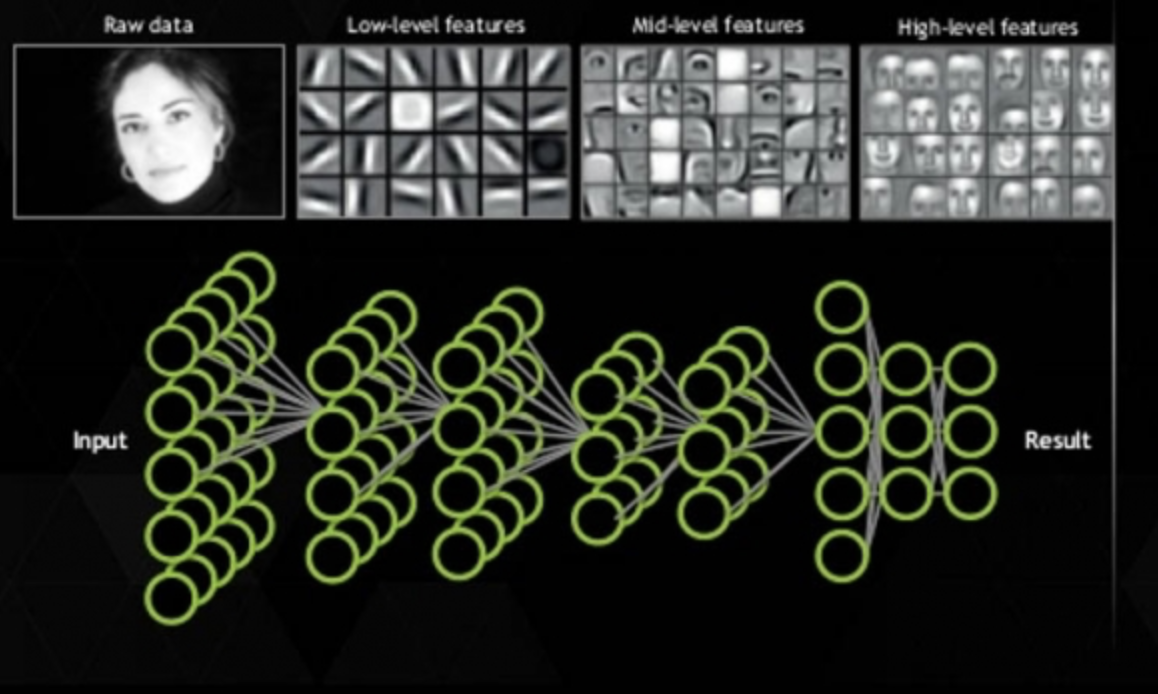
Through this same process, we can derive or alter meaning.
To put the psychological phenomena into computer science language:
We back propogate through our understanding of the world and our goals, so we can examine what the first assumptions we predicate our lives are based on and adjust the thought process to better align with our goals.
The first set of categorical assumptions we make about the world may be the most important as they are the foundation of our understanding of further cognitive processes.
What is real and what is unreal is not the same as what is true and what is important.
Given the fate that the entire imperical truth is not know and its not possible to base our emotional state around it, what then is important to humans is the question of "given the current circumstances, what can or should be done?"
What set of actions are most likely to lead to a positive outcome?
Who can I imitate to learn these actions?
What are the consequences of these actions?
What are the rewards of those actions?